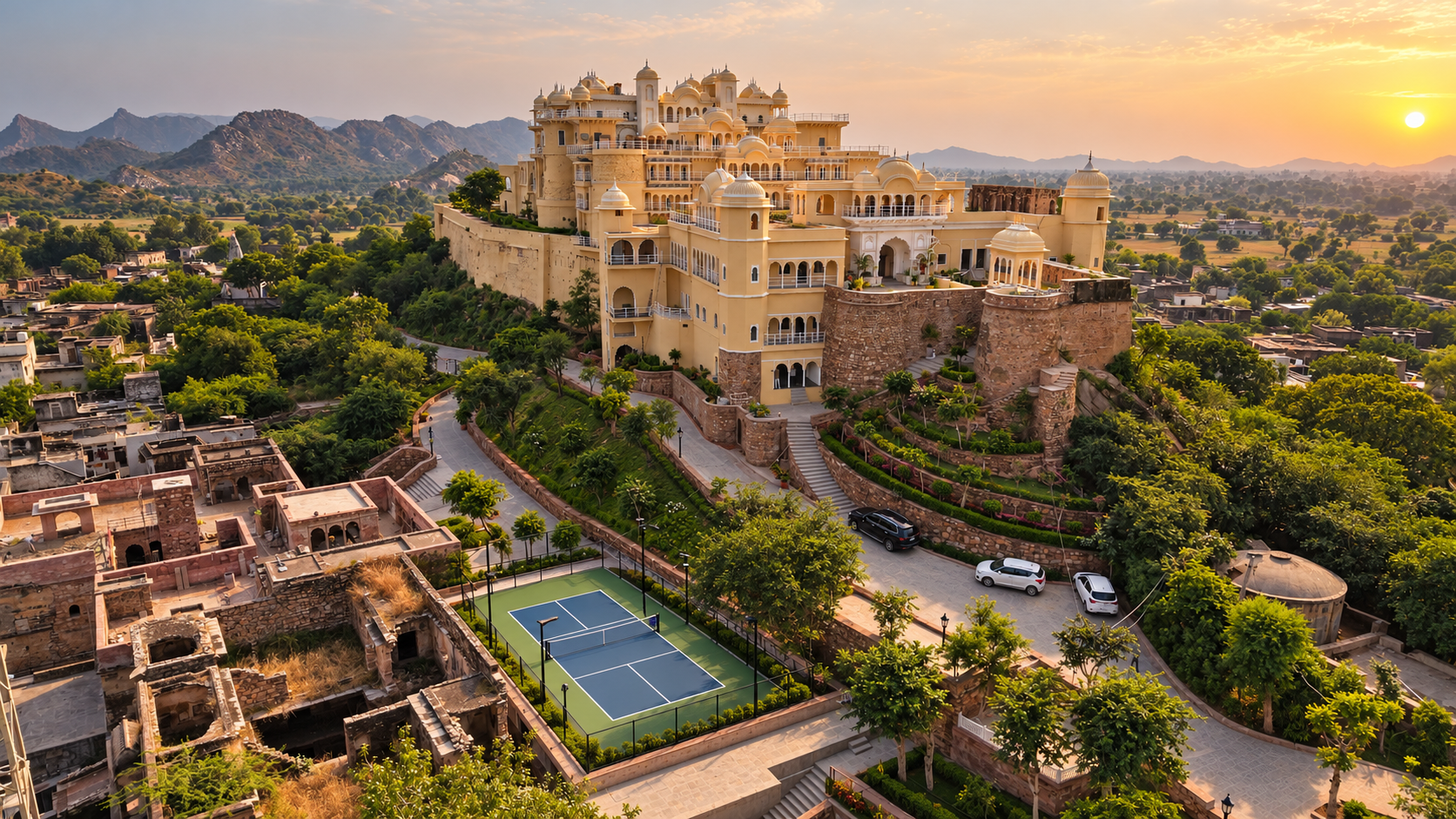
Virasat · A Restored Chauhan Rajput Fortress
Established in 1540 AD as a fortified stronghold and the principal residence of the Thakur of Tatarpur, the Qila evolved over successive generations.
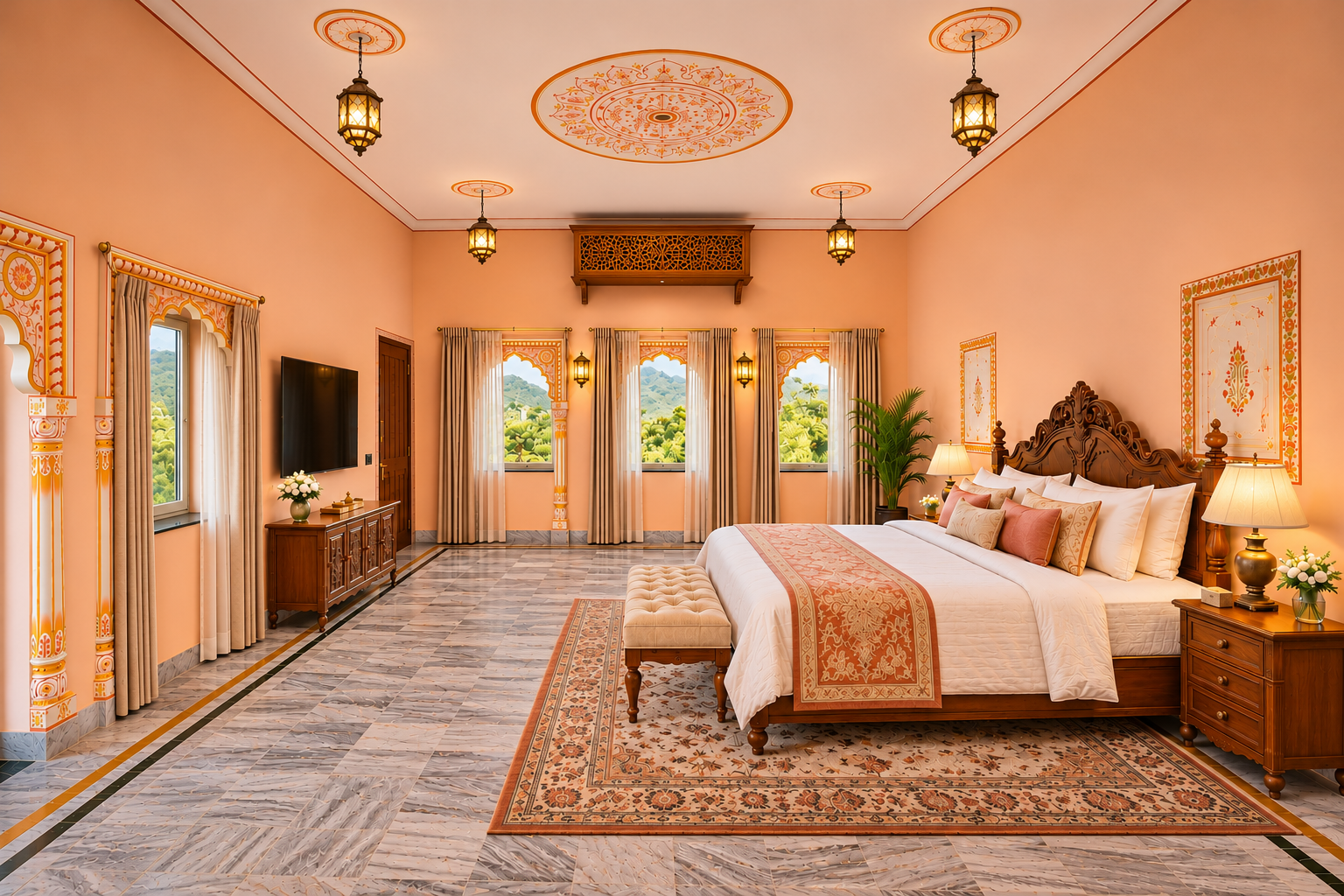
The most intimate of the Qila’s accommodations, Qila Classic rooms retain the close proportions and idiosyncrasies of the original fortress. Low doorways, deep-set windows, alcoves and unexpected outlooks place guests within the historic fabric of the Qila.
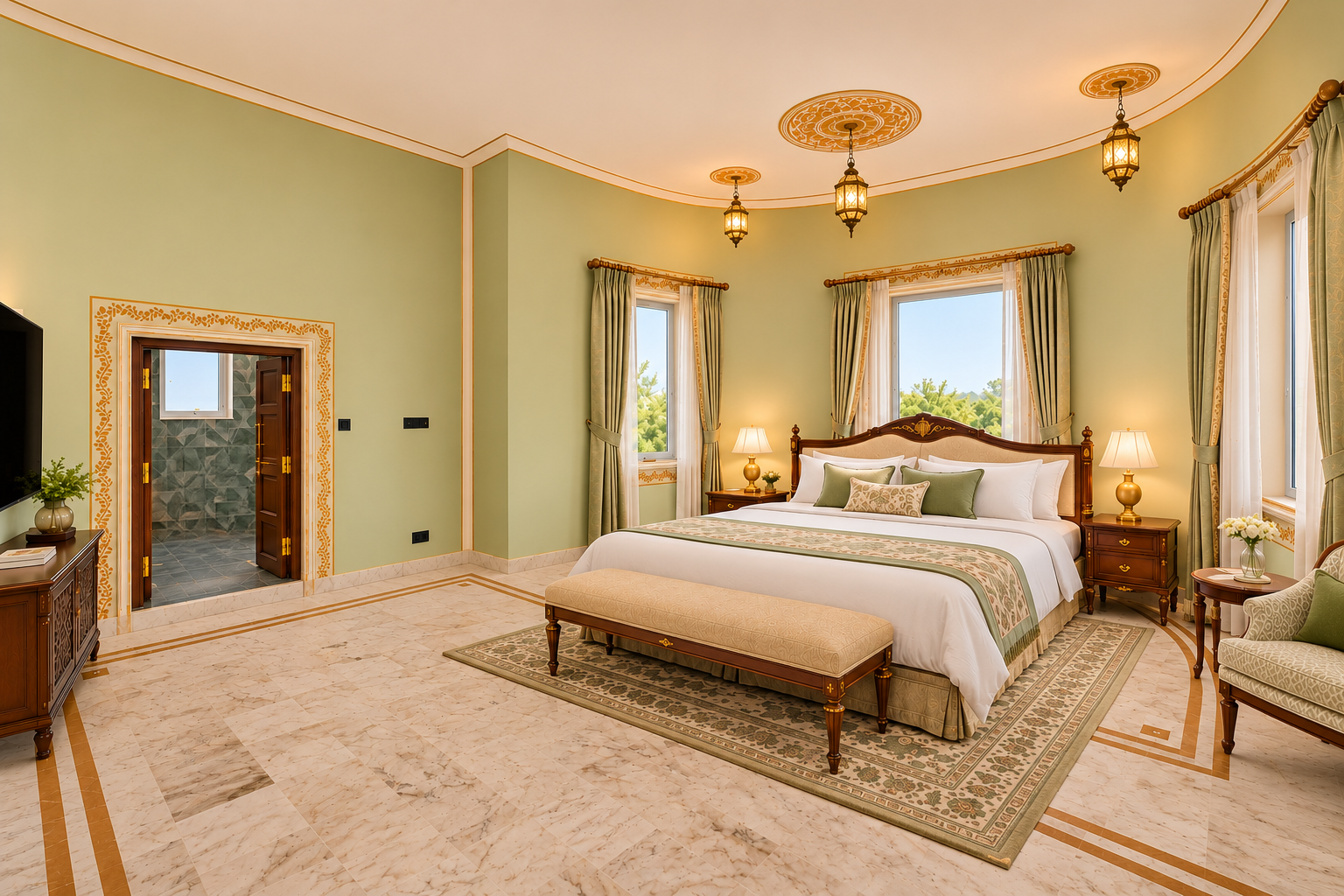
Darbar Thikana rooms evoke the character of the Qila’s former residential quarters. Ornament, considered proportions and varied configurations lend them a composed bearing, while individual architectural details ensure that no two rooms are quite alike.
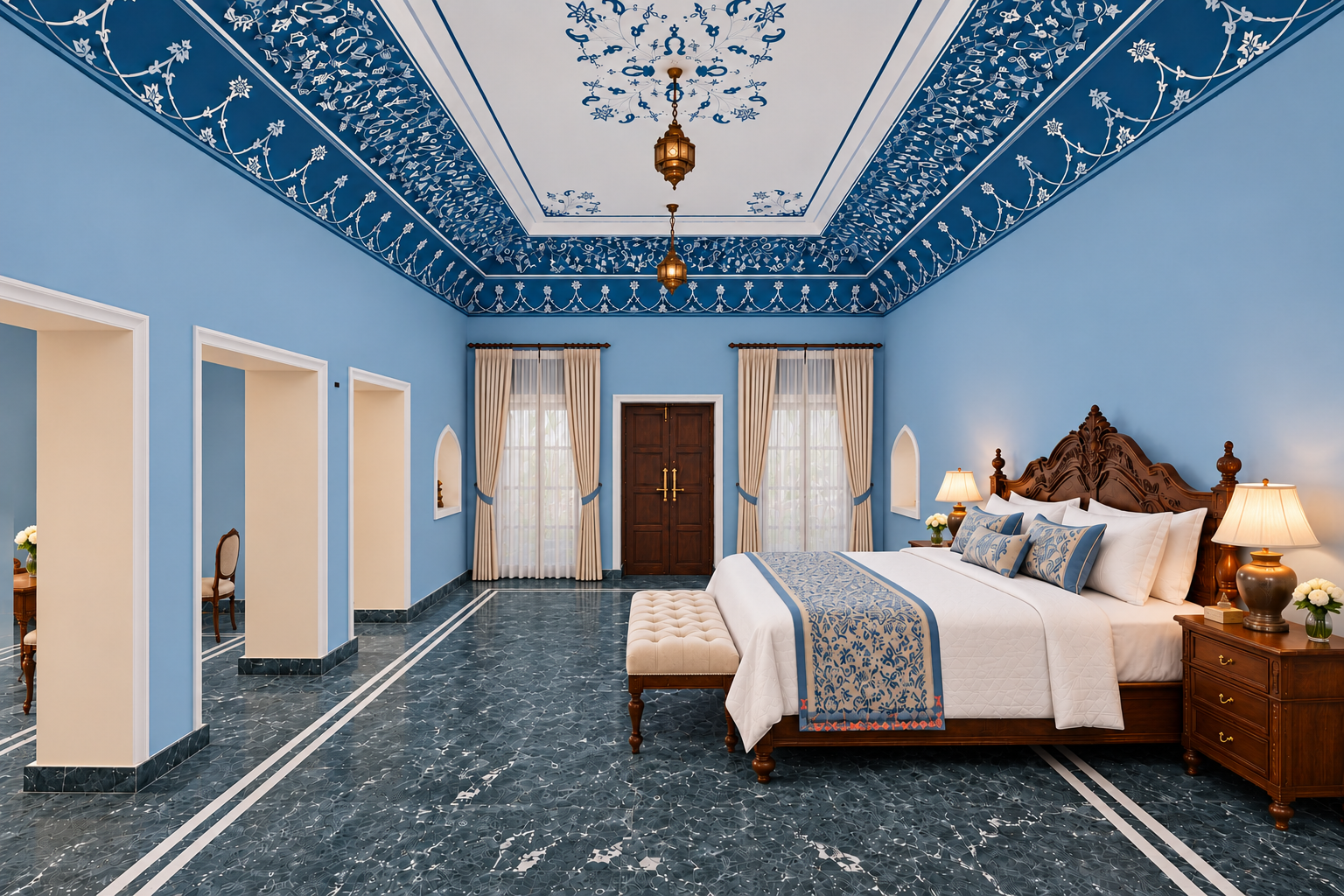
The Aravalli Diwan Suite is defined by space, outlook and its relationship with the outdoors. Generous interiors extend into private sit-outs and terraces, with elevated views across Tatarpur village, the surrounding countryside and the folds of the Aravallis.
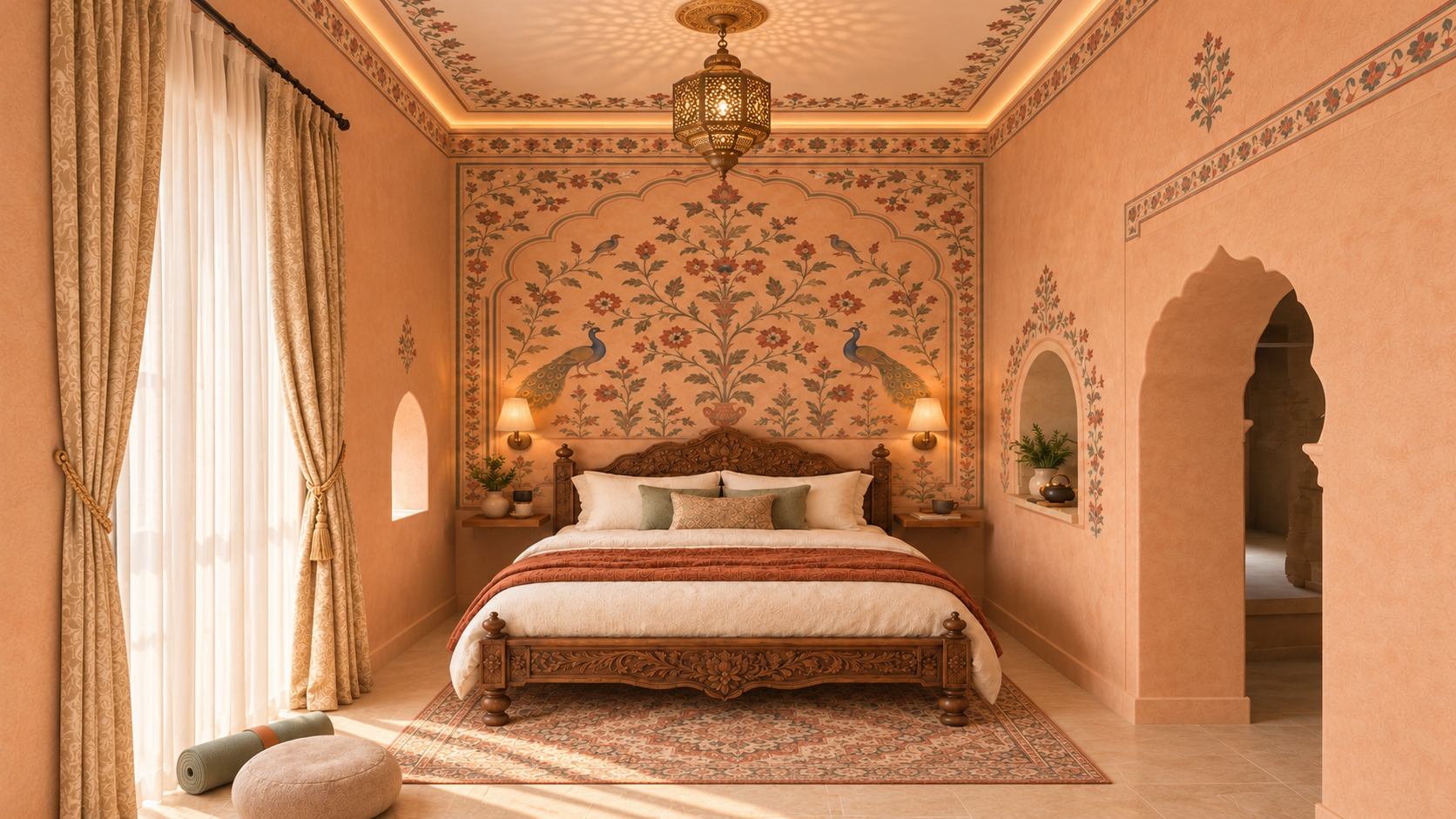
Set within a restored haveli at the foot of the Qila and adjacent to the spa, these suites offer a deliberate retreat from the activity of the fortress. Earth-toned interiors, restrained detailing and generous proportions create a quiet setting for privacy, repose and restoration.
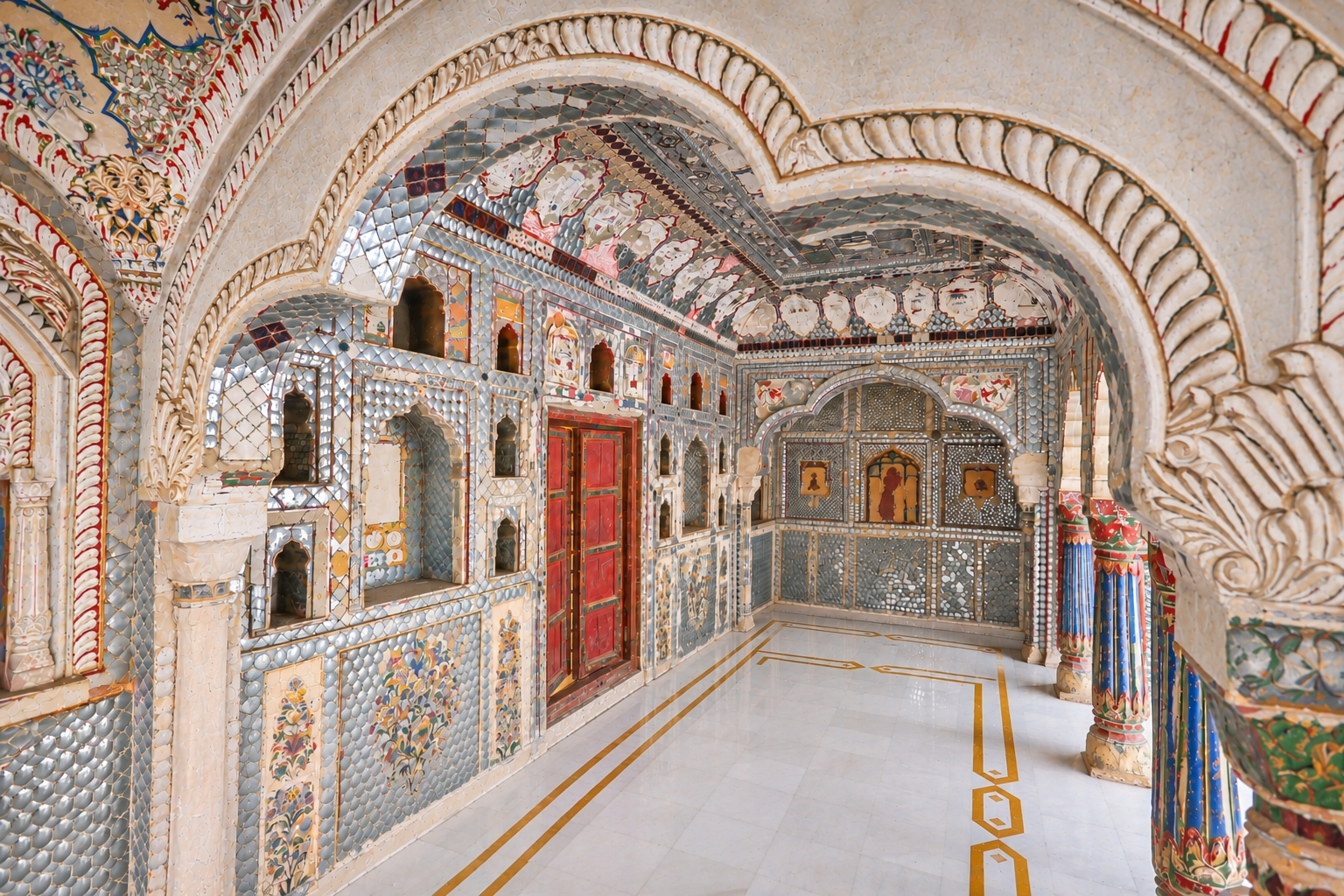
Deep Mahal, Sheesh Mahal, Prithi Niwas and Dera Alekh occupy four of the Qila’s most singular residences. Each takes its identity from a particular history, architectural feature or former purpose. Its name, proportions and preserved details determine the character of the suite.
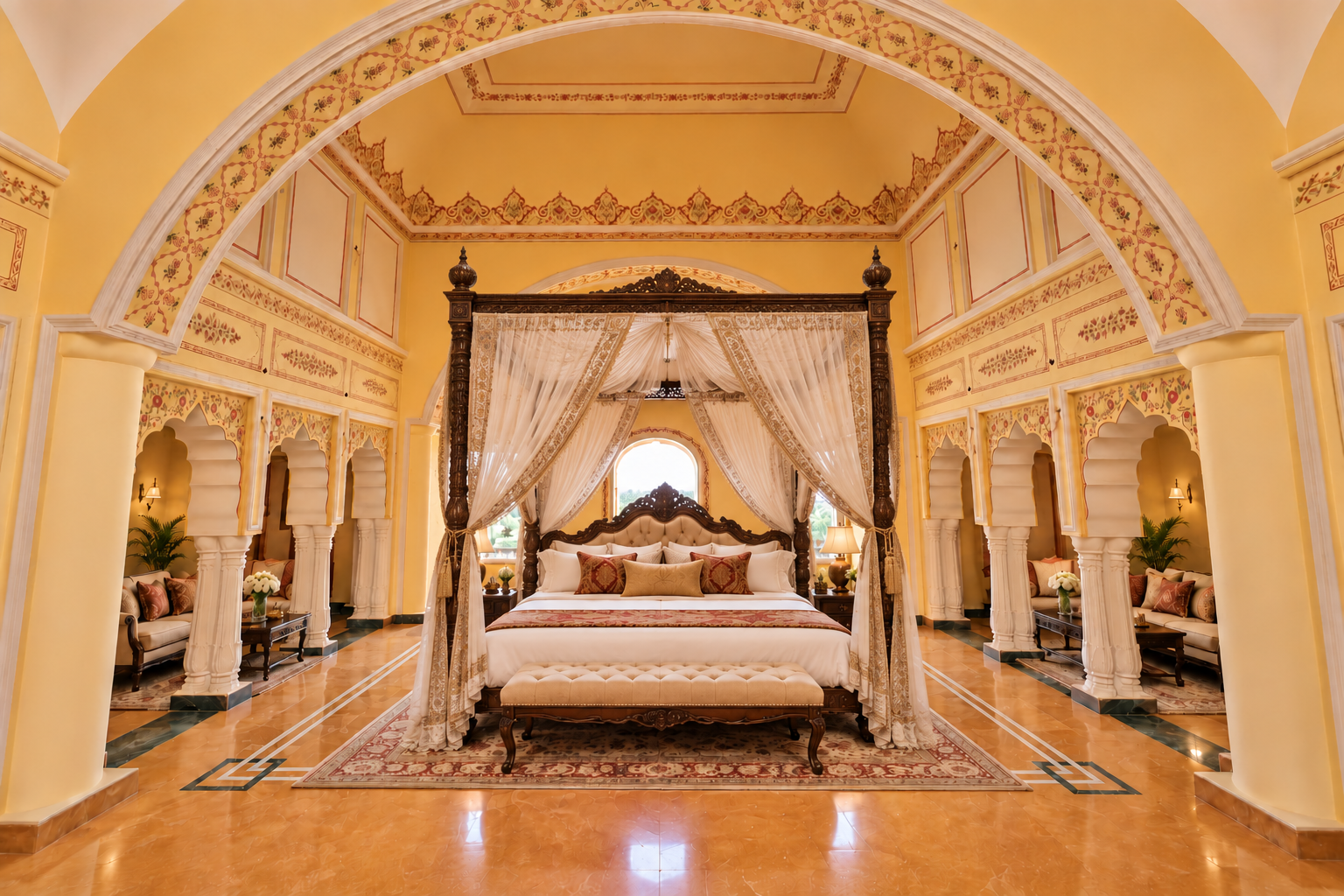
Raj Niwas is the Qila’s most expensive private residence. Its interconnected rooms, double-height ceilings and frescoes recall a space once associated with the stature of the household. Now resurrected as a private abode, it offers the fullest expression of residential life within the fortress.
The interiors take their direction from the inherited architecture of the Qila. Jaisalmer sandstone, luminous Makrana marble and deep green Udaipur stone establish a material vocabulary rooted in Rajasthan. Original frescoes have been carefully restored, while new compositions painted in traditional styles bring colour and lightness to the historic fabric.
Pastel shades temper the strength of stone and masonry. Traditional flooring, archways, deep-set windows and varied ceiling heights preserve the individuality of each room. Furniture discovered within the Qila has been restored and returned to use, complemented by canopied beds, floral textiles and hand-forged Moroccan lamps crafted by a master metalsmith.
Outdoor spaces are integral to the experience. Private Aapnodharis, terraces and selected splash pools extend the rooms into the open air, while interconnected courtyards, ancient passageways and stone staircases reveal the fortress’s distinctive spatial arrangement.
The approach is one of considered restoration: preserving character, embracing irregularity and allowing the architecture to shape the experience rather than imposing a single decorative language upon it.