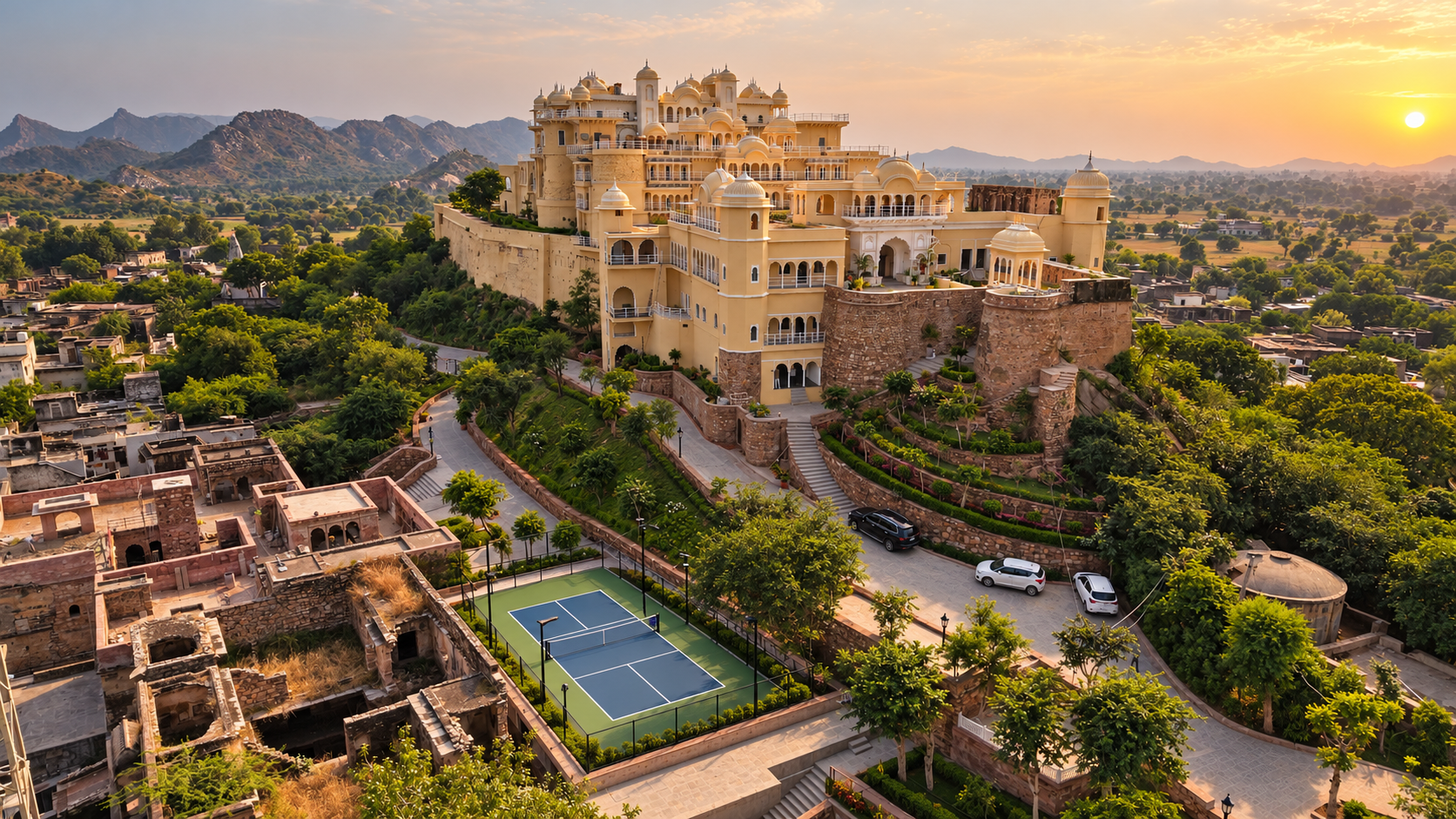
Virasat · A Restored Chauhan Rajput Fortress
Established by Thakur Tatar Singh on Aakha Teej in 1540 AD, Qila Tatarpur served as both a fortified stronghold and the principal residence of his lineage. Over successive generations, it became a witness to the changing histories of Tatarpur, Alwar and the wider Rajputana region.
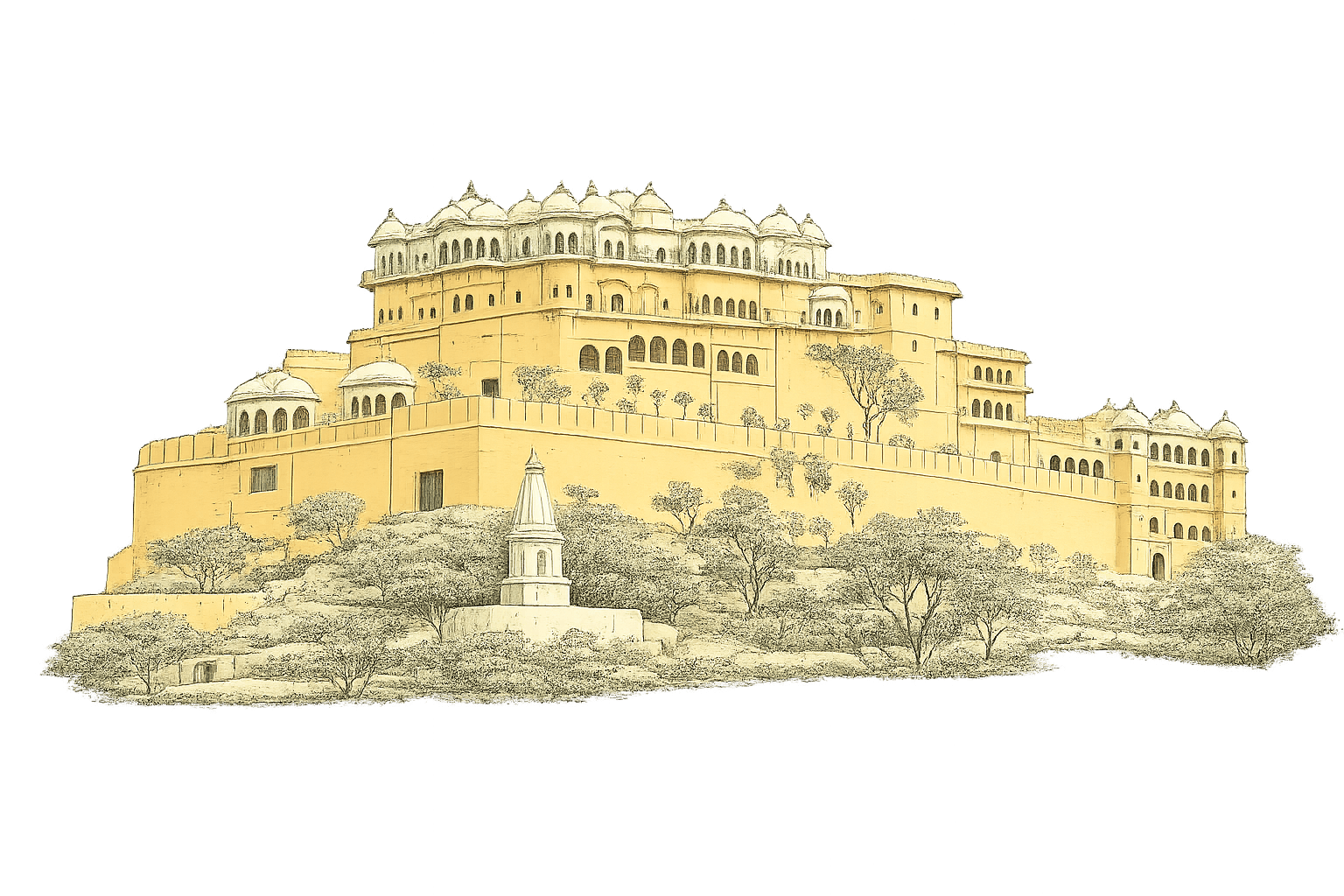
For years, the Qila has been our labour of love. Its architecture has been patiently restored, its stories gathered and its connection with the village renewed. We are now delighted to open its gates and share what has been resurrected.
Built as both a stronghold and a residence, Qila Tatarpur rises upon a plateau approximately 30 metres above the historic village. Its ramparts overlook cultivated fields, surrounding settlements and the undulating Aravallis, one of the oldest mountain systems on Earth.
Long before Alwar emerged as a princely state, this region was associated with Matsya Desh, the ancient kingdom of Virata. Tradition holds that the Pandavas spent the final year of their exile here in concealment during their Agyatvaas.
Within the forests of Sariska, Pandupol is linked to another episode from the Mahabharata: the encounter between Bhima and Lord Hanuman. Appearing as an elderly monkey, Hanuman humbled the mighty warrior and reminded him that strength without humility is incomplete. The temple and natural cleft in the rocks remain places of pilgrimage, binding the landscape of the Aravallis to one of India’s enduring epics.
Before its restoration, much of Qila Tatarpur had fallen into disrepair. Its resurrection took several years and extended far beyond the repair of walls. Layers of later construction were carefully examined, original materials and methods studied and architectural relationships gradually recovered.
Much of the Qila had fallen into disrepair, yet its character survived in a complex arrangement of courtyards, staircases, underground chambers and passageways. They connect the fortress both horizontally and vertically. The Sheesh Mahal, twin temples and covered routes into the Zenana offered further evidence of how domestic life, devotion and privacy had once shaped the architecture.
Ancient wells, water-harvesting systems, concealed tunnels and artefacts emerged during the work. They revealed how the fortress had once been inhabited, defended and sustained.
One living landscape
The restoration began with extensive research into Tatarpur and consultation with its community. The Qila and village were understood as parts of a single living landscape, with the renewal of one closely connected to the future of the other.
What has emerged is not a reconstruction of a vanished past but the continuation of a living inheritance.
The Qila’s irregularities, accumulated histories and architectural distinctions have been preserved, allowing nearly five centuries of life to remain legible within its resurrected form.